
Killer Portfolio Tips: For Creative to Get Ahead
Your portfolio can secure or lose you an interview. Professionals within the design sector have repeatedly discussed their grievances with designer’s portfolio’s, and what will turn them off to a potential candidate.
You are heavily invested in your own work, meaning sometimes you can be blind to something you would otherwise be blaringly aware of. It often pays to step back and gather outsider advice to better your own work.
So, to easily avoid these mistakes. Let our tips aid you as you create your most fabulous work, that showcases not only your professional ability, but your adventurous creativity too.



Knock them off their feet
You should absolutely start your portfolio with one of your favourite pieces of design work. Blow people away from the very beginning.
This feature stand-out piece doesn’t have to be your most professional. It may be something you have done that exercise’s your creativity on a personal level. Showcasing your unique flavour of design is not a bad thing, even if you’re going for a corporate design position.
Employers are keen to see how you can flex your creative muscles. As well as seeing how well you can stick to a brief to produce branded collateral.
As you want to start on a bang, finish on one too.
Choose another strong piece to finish your collection that ties the whole portfolio together nicely.
Be selective.
Use only your best work, quality over quantity. You may be tempted to show off your broad range of design work, and how much you have produced over your years working as a designer. However, this won’t get you far.
Employers want to see only your best, if you don’t feel proud of it, don’t include it.
Don’t saturate your portfolio with excess. Leave them wanting more!
Professional & Creative
Are you a recent graduate?
If so, this little section is just for you and it feeds into what we mentioned before regarding your creative work and branded work.
Don’t fall into the trap of trying to make your portfolio look overly ‘professional’. Employers understand you are fresh from University and may not have a large variety of work.
There is little need to make your portfolio look like it has just walked out of It’s Nice That or Branding Collective.
They want to see YOU. Your style, your creative spark, your zest for design. So, don’t let your spirit be lessened by the desire to look like you have been working for top design houses for years.
With that said, allow your creativity to run free BUT in a structured and pleasant way. Viewing your work is an experience, so don’t make it complicated or difficult to do so.
If you aren’t a graduate.
You work can easily become a bit overly corporate after years of designing for companies with tight branding guidelines to follow and strict briefs.
Having this work is brilliant, it shows your capacity to work closely to briefs and deliver as your client/company needs.
However, employers don’t want to only see this. You are your own designer with your own specific flavour. People want to see this just as much.
Keep it well structured but don’t be shy to add in your personal work. It will take you a long way with prospective employers.
Don’t forget however it IS good to mix up your portfolio with both digital and printed work… Unless of course, you are going for a role that is heavy one way or the other, but it will show your diversity and capability to design for different mediums.
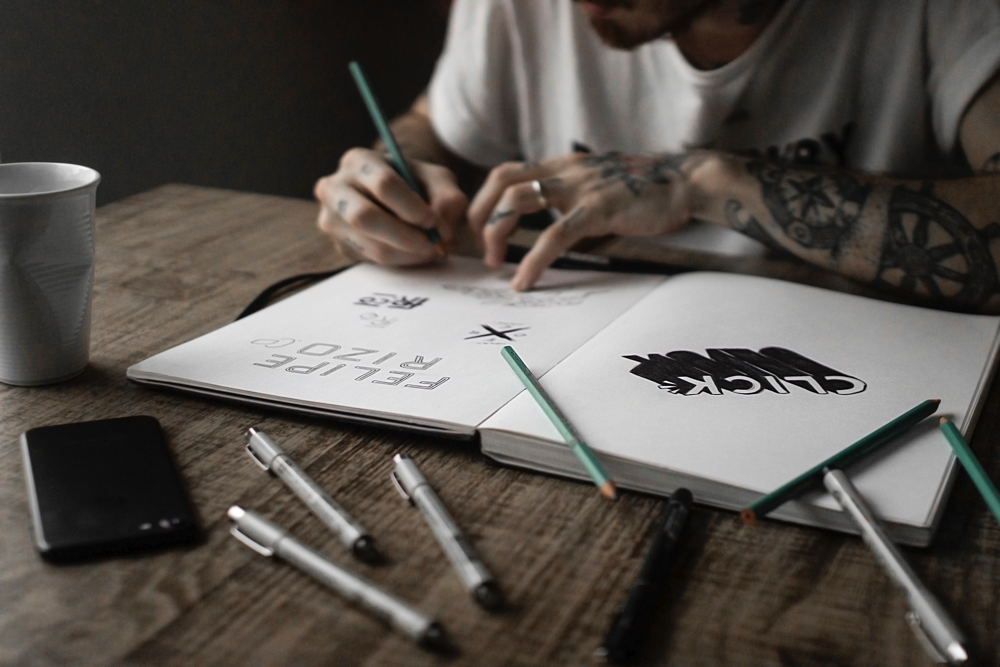
Additionally, it may seem like wasted space, as you do need to somewhat limit your portfolio. But it is interesting to include your process.
This could be photos of yourself beavering away on a project. Or, it could be copies of your sketch book showing design development.
People like to see this. So, show it!
Copy is art
Your portfolio construction doesn’t end once you have beautifully placed your images onto a page and have created that desired aesthetic flow.
Your words can shine out just as much as any imagery.
Take your time here and choose great descriptive words to compliment your designs.
If you aren’t a great copywriter, there’s excellent examples everywhere; some of our favourites include; Liz Designs and Buzzworthy Studio, both of these examples describe their work beautifully and include great descriptive words too. Design and writing come hand in hand. For some advice for writing great copy for your design portfolio click here.
It may be worth your time taking on a soft skills course to improve your writing ability. Reed is a great site to view online courses in all manner of things, including; copywriting.
Soft skills courses aren’t overly demanding. They can usually be done online, at a pace suitable to you. If you’re lucky, you can usually find them at a discounted price too!
Additional copy to include in your portfolio;
- What was this work for? Was it a digital campaign? Or was it event collateral? Make it’s intended purpose clear
- What was the original brief?
- Did you use your own design intuition to alter or better the brief?
- Overall outcome of said brief
- Add a welcoming paragraph to each portfolio project or section, that introduces the reader into your work and your thought process.
Online or printed?
Although a PDF viewer portfolio is completely acceptable there can be problems with using this alone.
Sometimes PDF files may be too large to send via email or open at the other end. Sending a website link can be more reliable.
This also allows the employer to see your website building skills, even if only through Wix or WordPress. This is still a greatly valued skill.
It also makes life easy as you can add this link to your LinkedIn profile or if you add your work to behance.
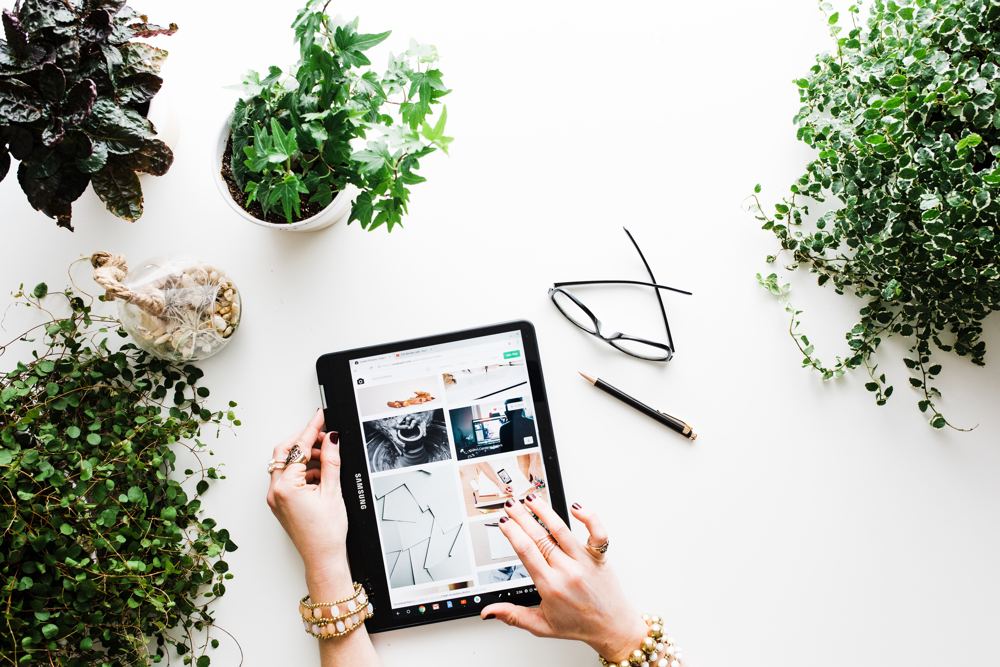
In fact, if you send your portfolio in the means of website to your prospective employer. This means at interview you can show it on an iPad as a PDF, which will be different to how they have seen it previously.
The same works for sending a PDF, at interview you want to do more than pull out the same work you sent at application stage. Wow them further by showing your work in a different way.
If you are old school, you may still opt to have a printed version too. Actually, at interview stage, pulling out a printed copy of your portfolio can be a breath of fresh air in this heavy digital world.
Designers like to have something tangible to touch and feel. It’s in their blood to view art with many senses and not their eyes alone.
Here are some amazing examples of tangible portfolio’s;
Pintrest is a brilliant platform to inspire your creativity!
It’s in the detail
Designers are often victim to very tight deadlines, with an army of marketeers and managers running a fine-tooth comb through their work to identify errors.
It is so incredibly important to ensure your portfolio is completely error-free (or as close to as possible).
Here are a few things to look out for;
- Do all your hyperlinks work on your website or PDF viewer?
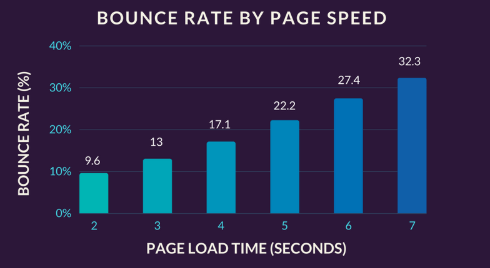
- Are images of an acceptable quality? They should be both of quality and not so big they slow the page down – we are a world of short attention spans. If the web page doesn’t load in 2 seconds you will lose almost 10% of visitors. For each second the bounce rate increases dramatically
- Be sure that your website is user friendly. Everything you do as a designer is about the user/viewers experience. Design should make us feel. A badly organised site will only make us feel frustration and a quick depletion in attention. Keep it simple and try not to over complicate it
- Spell checker. So many designers do not spell check their work. Sure, designers aren’t copy writers, but sloppy work is sloppy work, and you want to present at your very best. Surprisingly, many aren’t even aware of Adobe’s spell checker capabilities. In InDesign you need only go to Edit > Check Spelling. In Illustrator Edit > Spelling > Check Spelling
- Simple design principals are worth double checking. Ensure consistency in spacing and alignment
Furthermore, an impressive extra step worth taking is ‘success measurability’. If you can show how your work has impacted a Social Media project or an email campaign. Marketers love to see ROI.
Finally, get a second opinion. When you have looked at something for 10 hours straight, you’ll find you miss obvious mistakes. Let someone with a fresh eye look and offer advice to better your work.
Great Examples
Online examples and tutorials are a great place to start as you begin to create your portfolio. By no means copy anything you see.
It’s obvious when a designer has copied a template online or another’s work. Steer clear of this, as easy as it may be at time when your own creative spark has somewhat dwindled (this happens to everyone from time to time).
If you are unsure of the direction to take your portfolio in. There are a few techniques you can follow;
- Get inspiration online – create a collage of what engages you and draws your eye
- Get inspiration offline – visit art galleries or museums, it’s great for creativity to engage with the physical world
- Rest – forcing inspiration won’t work, understand when it’s time to rest to reignite your creative fire
- Get into nature, nature has so many healing benefits and getting your blood pumping through walking outdoors is a great way to get inspired
- Be creative – but in different ways! If you are a digital designer, try putting paint brush to paper. Or knitting needle to yarn. If you’re a fabric printer, try doing a new tutorial on Photoshop. Shake up what your used to, to allow creativity to flow once again
Wrap up
Hopefully, all this advice has greatly helped you on your way to creating a killer portfolio!
Creatives, we would love to see your portfolio’s! If you’re a loud and proud designer, send them into us at recruit@turnerfox.co.uk
We have many creative positions available. So, if you simply want to show us your portfolio or if you are looking for a job, get in touch either by email or on 01623 656 303.
Head over to our jobs section now!
Happy designing!
Recent Blog Posts

Are You Suffering From Pandemic Burnout?
Simple steps to reduce your stress.

Make Remote Working Over Christmas a Success!
Christmas joy is undoubtedly contagious throughout most office environments. Many may be wondering how remote working over Christmas may feel. Although sad, that we will be missing out on the impromptu cookie and coffee breaks. Or, having Christmas FM playing all day...

11 Most Haunted Places in Nottinghamshire
Don’t we all just love Autumn! We can pull out our favourite cosy jumpers and indulge in decadent, delicious hot chocolates. Autumn also means, Halloween is almost here! This years halloween is also a special one, as it is under a ‘blue moon’, which only happens once...
0 Comments